17 Aug 2026
Time Zone Shifts and NBA Performance: Jet Lag Effects on Cross-Country Wagering Markets
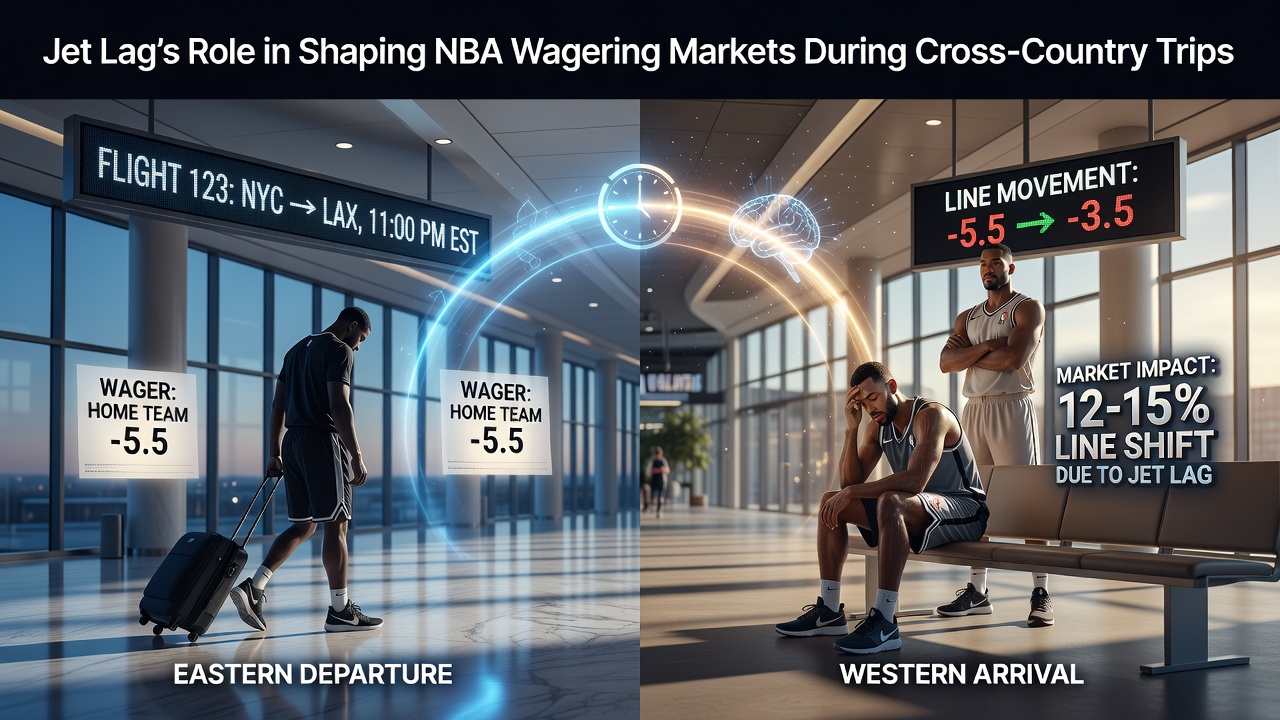
Cross-country NBA trips create measurable disruptions in player performance that betting markets track and adjust for over time, and data from multiple seasons shows consistent patterns in scoring, efficiency, and spread outcomes when teams cross three time zones. Teams traveling eastward often face greater challenges because their internal clocks advance while game times remain fixed to local schedules, which leads to reduced sleep quality and slower reaction times in the first 48 hours after arrival.
Travel Patterns and Market Adjustments
Bookmakers incorporate travel data into line setting because historical results reveal that west-to-east trips correlate with lower team totals and higher under probabilities, while east-to-west travel produces milder effects on offensive output. Observers note that oddsmakers widen spreads by an average of 1.5 to 2 points when a team arrives the day before a game after a transcontinental flight, and this adjustment accounts for documented drops in three-point shooting percentage and assist-to-turnover ratios.
Researchers at major sports science institutions have tracked these variables across hundreds of games, and their findings indicate that circadian misalignment affects perimeter players more than big men because guard play relies heavily on quick decision-making that suffers under fatigue. Markets respond accordingly, with totals lines dropping when the schedule features multiple cross-country games in a short window.
Performance Data Across Seasons
Figures from the 2024-2025 campaign show that teams arriving from the Pacific Time Zone to Eastern Time Zone venues averaged 4.2 fewer points in the first half compared to their season norms, and similar dips appeared in player prop markets for points and assists. East Coast teams heading west recorded smaller declines, averaging only 1.8 points below expected output, which aligns with the shorter biological adjustment required when clocks move backward.
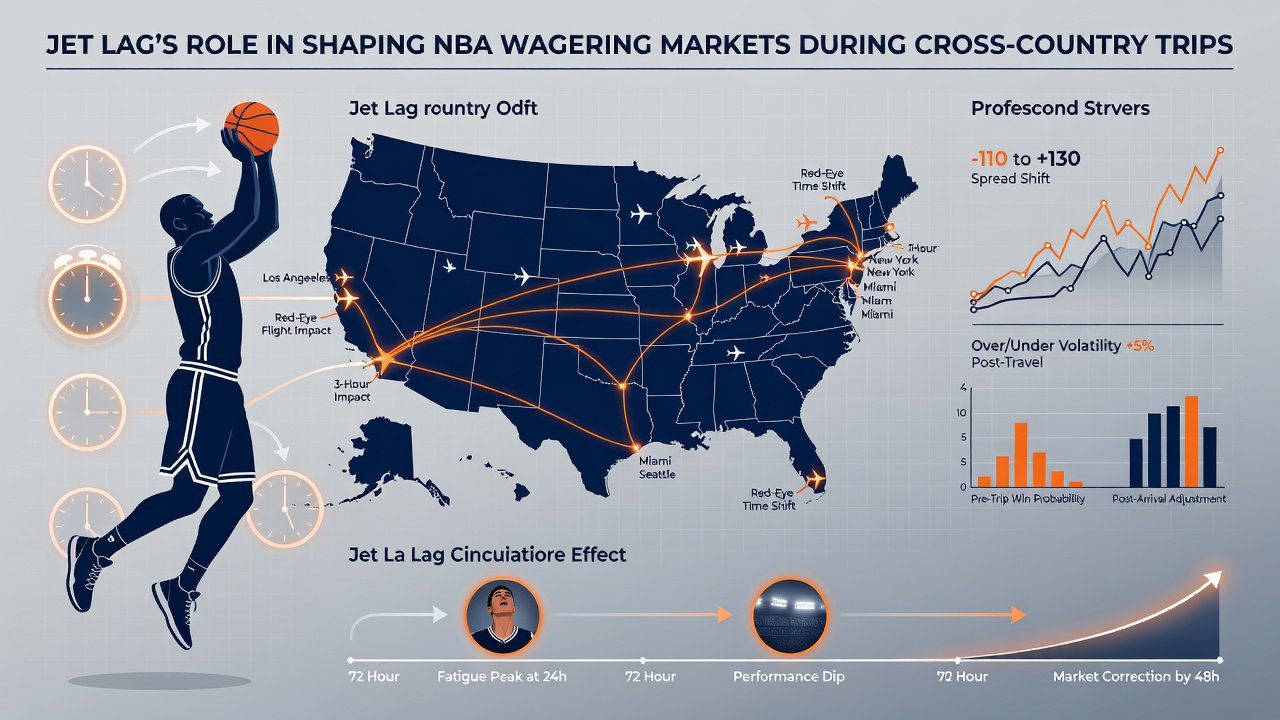
Betting volumes on player props shift noticeably in these scenarios, and sportsbooks report increased action on unders for shooting guards and point guards who logged heavy minutes on the preceding travel day. Data from league tracking systems confirms that defensive metrics such as steal rate and contest percentage also decline after eastward flights, creating value in opponent prop markets that sharp bettors have exploited over multiple seasons.
Schedule Density adn Recovery Windows
August 2026 schedule releases will again highlight clusters of back-to-back cross-country games that amplify jet lag effects, and analysts expect oddsmakers to build larger adjustments into opening lines for those dates. Teams with fewer than 36 hours between arrival and tip-off show the most pronounced drops in effective field goal percentage, according to internal league reports shared with performance staff.
One study published through a North American sports medicine consortium examined 1,200 regular season games and found that recovery protocols such as light exposure therapy and adjusted meal timing can mitigate some performance loss, yet many clubs still operate with limited resources on the road. Markets price these variables because sharp money consistently targets totals and spreads in travel-heavy weeks, and line movement data reveals that public betting often lags behind these informed adjustments.
Player Props and Circadian Impact
Individual prop markets reflect the same trends, with minutes restrictions and reduced usage rates appearing more frequently after long flights, and this pattern holds across both conference and interconference matchups. West Coast teams playing late eastern starts encounter the steepest biological mismatch because tip-off occurs near their normal bedtime, which reduces scoring efficiency in the fourth quarter where fatigue compounds.
Industry reports from betting analytics firms document that unders on team totals hit at a 53 percent rate in these specific travel situations over the past five seasons, and similar edges surface in rebound and assist props when teams cross multiple zones. These outcomes stem from measurable physiological changes rather than random variance, and line setters continue to refine their models with each new data set.
Conclusion
Jet lag remains a quantifiable factor in NBA wagering because travel across time zones produces predictable shifts in performance metrics that markets have learned to price. Teams, oddsmakers, and bettors all operate with access to the same travel and schedule data, which means edges narrow when information spreads quickly yet persist in niche prop categories where public attention stays lower. Future seasons will continue to test how clubs manage these disruptions and how lines evolve in response.