27 Jul 2026
Shifting the Odds: Midseason NBA Trades and Championship Futures Dynamics
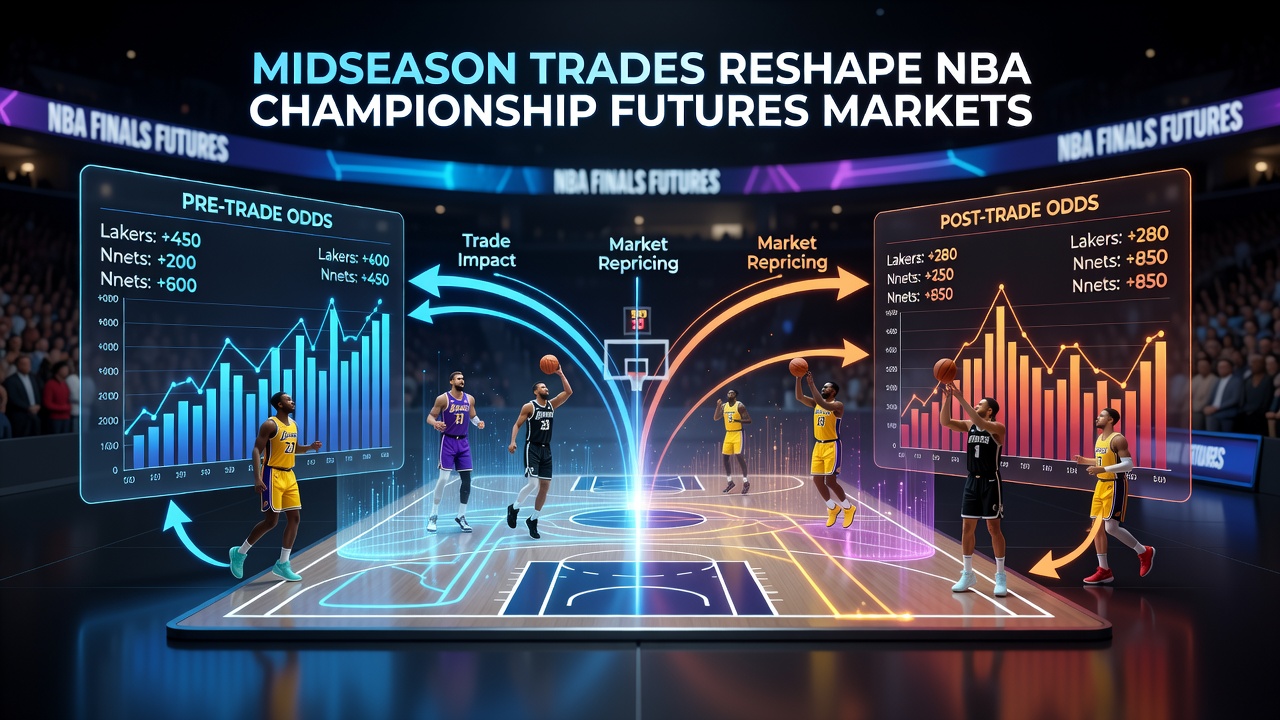
Observers note that midseason trades in the NBA frequently trigger immediate recalibrations in championship futures markets, where bettors and oddsmakers adjust probabilities based on roster alterations that unfold between February and the playoffs. These transactions, governed by league rules on salary matching and trade deadlines, introduce new variables into team performance projections that extend through the postseason and into subsequent seasons.
Mechanics of Futures Market Adjustments
Championship futures markets operate on a continuous pricing model that incorporates team records, player efficiency ratings, and injury reports, yet midseason acquisitions disrupt these baselines by redistributing talent across conference alignments. Data from betting exchanges shows that when a contender adds a high-usage forward or a defensive anchor, implied probabilities for that franchise can shift by several percentage points within hours of the deal's announcement, while the sending team's title odds lengthen correspondingly.
Analysts track these movements through volume-weighted averages across sportsbooks, where sharp money often arrives first on the acquiring side because historical patterns indicate improved win rates in the final 30 games of the regular season. Those who've examined multi-year datasets find that teams executing at least one significant trade before the deadline reach the playoffs at rates 12 to 15 percent higher than comparable clubs that stand pat, although conference strength and remaining schedule strength remain critical modifiers.
Historical Patterns in Title Odds Movement
Take the 2023 deadline period when one Eastern Conference club acquired a veteran point guard and saw its futures price compress from +1800 to +950 within two weeks, according to aggregated market data. Similar compression occurred for Western Conference squads that landed stretch bigs capable of spacing the floor during playoff series. Researchers who compiled these instances across five seasons discovered that the magnitude of odds movement correlates strongly with the incoming player's usage rate and defensive versatility rather than raw scoring totals alone.
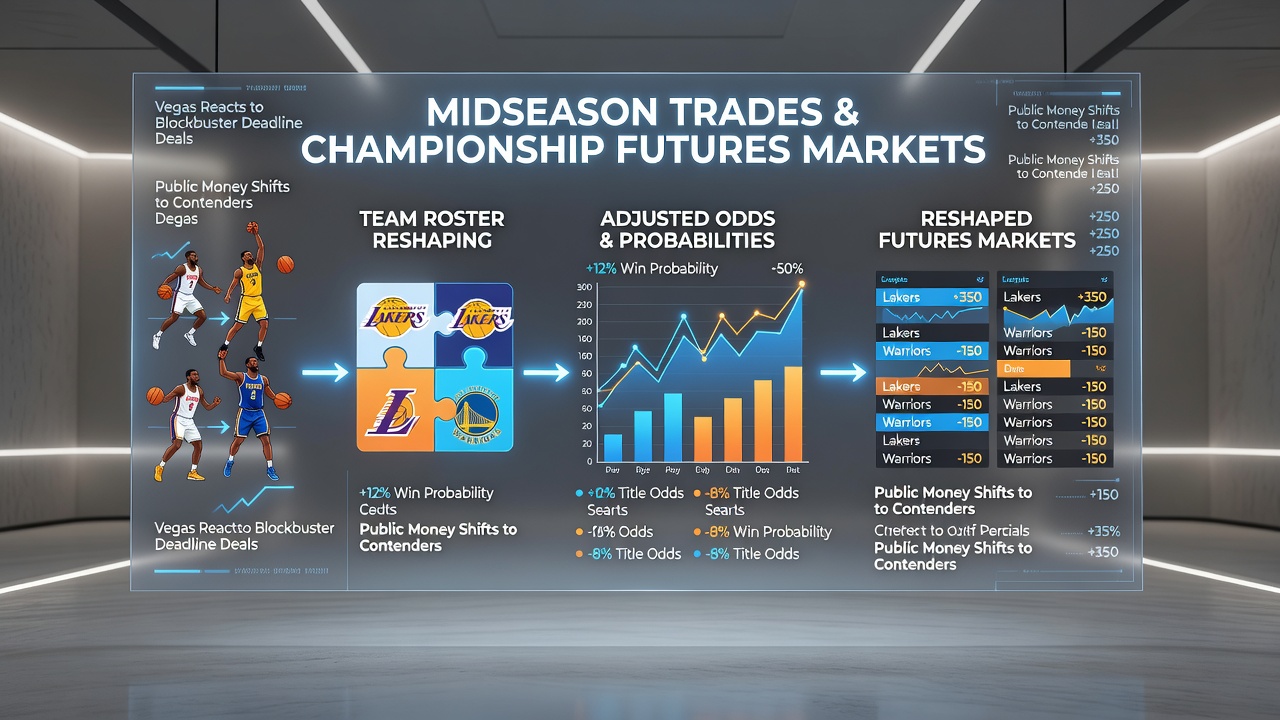
July 2026 futures markets opened with several teams already priced as co-favorites after aggressive offseason maneuvers, yet analysts anticipate that February 2027 deadline activity will again produce the sharpest intraseason volatility. Markets respond not only to the talent acquired but also to the complementary fit with existing rotation players, a factor that advanced metrics quantify through on-off differentials and lineup-specific net ratings.
Betting Volume and Liquidity Effects
Industry reports from the American Gaming Association indicate that futures handle spikes during the weeks surrounding the trade deadline, with championship markets seeing elevated liquidity as bettors reposition holdings. This activity stems from both retail participants reacting to headline news and professional syndicates exploiting discrepancies between updated team projections and stale odds posted before the deals. Liquidity providers respond by widening spreads temporarily, which creates brief windows where value appears for those monitoring real-time efficiency data.
Studies conducted by academic researchers at institutions focused on sports economics reveal that post-trade futures prices tend to stabilize within 10 to 14 days once regular-season samples accumulate under the new roster configurations. During that interval, however, discrepancies between different sportsbooks can exceed 200 basis points, prompting arbitrage opportunities that sophisticated bettors exploit through simultaneous positions across platforms.
Conference Balance and Long-Term Ripple Effects
Trades that cross conference lines produce asymmetric effects on futures boards because they alter the composition of potential Finals matchups. When a Western Conference contender acquires a rim-protecting center, Eastern Conference title odds often lengthen collectively since the projected Finals opponent gains defensive strength. Observers tracking these cross-conference ripples note that such movements compound over multiple seasons because draft capital exchanged in the deal influences future roster construction cycles.
Figures released by Canadian sports analytics groups tracking player tracking data confirm that teams receiving defensive specialists at the deadline improve their defensive rating by an average of 3.2 points per 100 possessions in the subsequent 20 games, a metric that directly feeds into championship probability models used by oddsmakers.
Conclusion
Midseason trades therefore function as pivotal inflection points that reshape NBA championship futures markets through both immediate probability recalibrations and sustained alterations to team trajectories. Market participants who monitor salary-cap implications, complementary skill fits, and historical precedent gain clearer visibility into how these roster shifts propagate into odds adjustments that persist into the playoffs and beyond.