1 Aug 2026
Referee Crew Rotations and Adjustments in NBA Betting Markets Over the Full Season
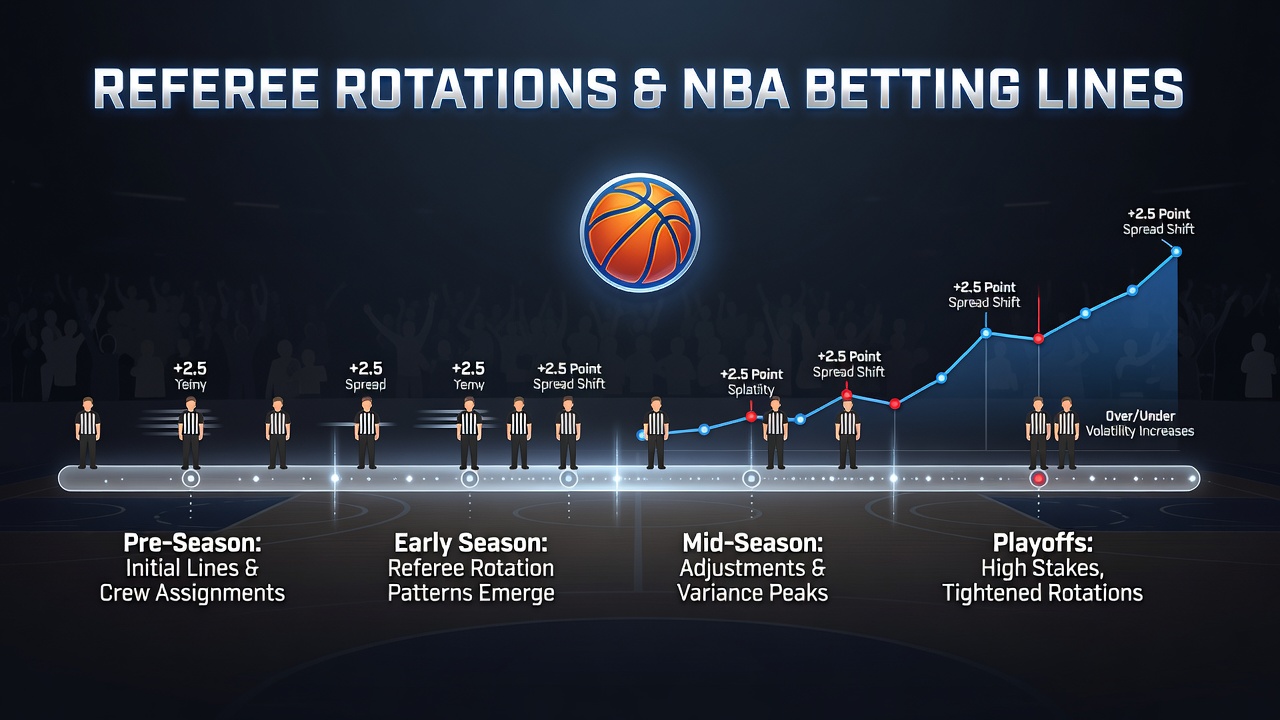
Referee assignments in the NBA follow a structured rotation system managed by the league office, and these rotations create measurable shifts in betting markets throughout the regular season and playoffs. Crews consisting of three officials each receive schedules that rotate across teams, venues, and game types, with data from the past decade showing consistent variations in foul rates, free throw attempts, and pace that linesmakers incorporate into opening totals and spreads.
Mechanics of NBA Referee Rotations
The league maintains a pool of approximately 70 full-time officials who work in rotating crews, and assignments typically get released a few days before each slate of games. Observers note that back-to-back games and cross-country travel influence which crews receive certain matchups, while veteran officials often handle high-profile contests. This rotation pattern produces statistical clusters where certain crews call more fouls per 100 possessions than others, and betting markets adjust totals accordingly once assignments become public.
Data compiled across multiple seasons reveals that crews with higher foul differentials tend to push game totals upward by 3 to 5 points on average, particularly in games involving teams that draw contact at elevated rates. Sportsbooks monitor these tendencies through internal models that factor in historical crew performance against specific team styles, and line movements often occur within hours of crew announcements.
Statistical Patterns and Market Responses
Research from academic institutions tracking officiating data indicates that referee rotations correlate with changes in defensive three-second violation frequency and loose-ball foul calls, both of which affect possession counts and ultimately scoring outputs. One analysis covering 2018 through 2025 found that certain crews averaged 22.4 fouls per game while others stayed near 18.7, creating a spread differential that sharp bettors target when lines open without full crew information.
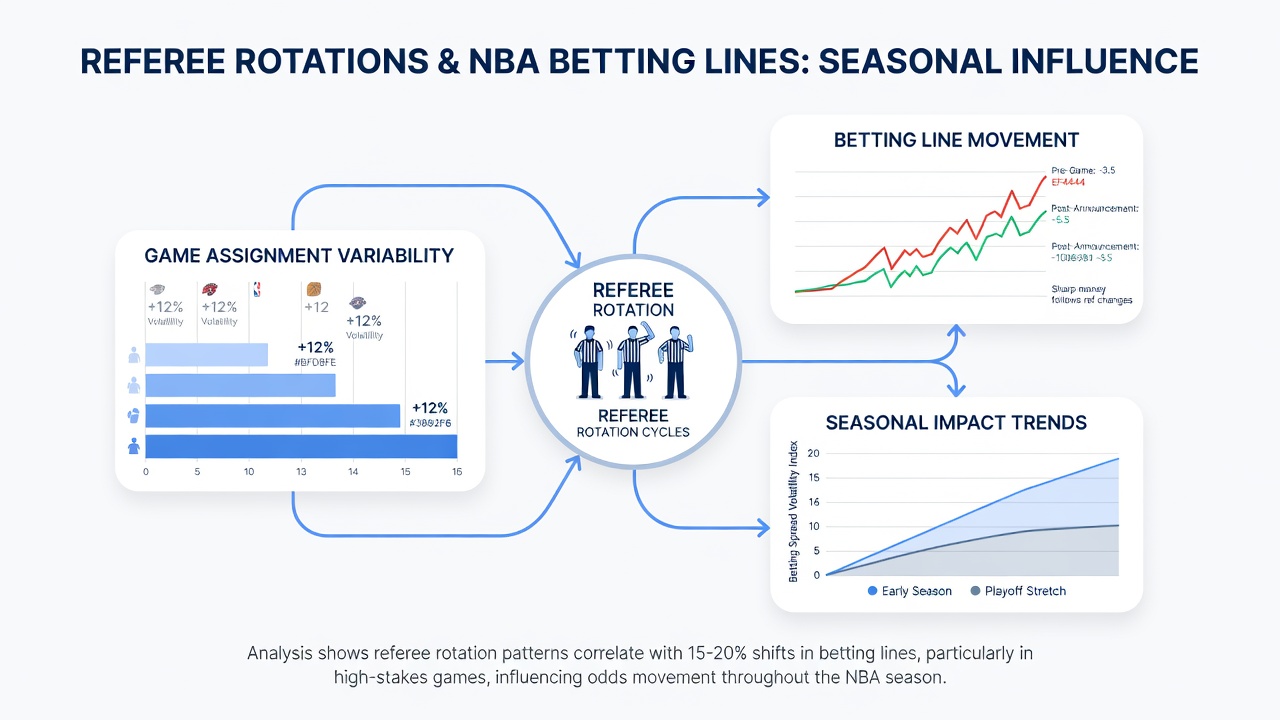
Linesmakers at major sportsbooks integrate these figures into their algorithms, and early season totals frequently move once rotation schedules become clearer around the second week of October. Throughout the campaign, these adjustments compound because teams adapt their strategies based on known crew tendencies, which in turn feeds back into updated betting lines.
Seasonal Variations and Playoff Implications
August 2026 marks the start of pre-season referee training camps where the league introduces rule clarifications and reviews prior-year data, and these sessions often precede adjustments to rotation protocols that carry into the regular season. Early months see more variability in crew assignments as the league balances workloads, while mid-season rotations stabilize around familiar groupings that markets price more accurately.
Playoff rotations narrow to a smaller subset of officials, and historical records show tighter foul distributions that compress totals relative to regular-season averages. Betting markets reflect this compression through reduced totals movement once playoff crews are confirmed, although individual series still produce notable line shifts when high-foul crews receive long playoff assignments.
Impact on Different Bet Types
Player prop markets respond directly to referee rotations because certain officials call more shooting fouls on perimeter players while others focus on post play. Rebound props and assist lines show smaller but detectable movement once crew information circulates, since pace alterations from foul volume change possession opportunities. Spread betting sees the least immediate reaction to rotations because team strength differentials dominate those markets, yet totals and player props register clearer correlations according to multiple tracking services.
Industry reports from organizations such as the American Gaming Association document how sportsbooks update internal databases with referee statistics each season, allowing them to recalibrate lines more rapidly than casual bettors can track independently. This information asymmetry narrows as the year progresses and more data accumulates on current crews.
Conclusion
Referee rotations represent one variable among many that shape NBA betting lines, yet their influence remains consistent enough for markets to price them systematically. Data from league-wide tracking and independent studies continues to refine how these assignments translate into line adjustments, and observers expect further integration of real-time officiating metrics as technology advances. The interplay between crew tendencies and seasonal scheduling produces ongoing opportunities for lines to reflect updated information throughout each campaign.