10 Aug 2026
NBA Three-Point Volume Patterns After High-Scoring Performances
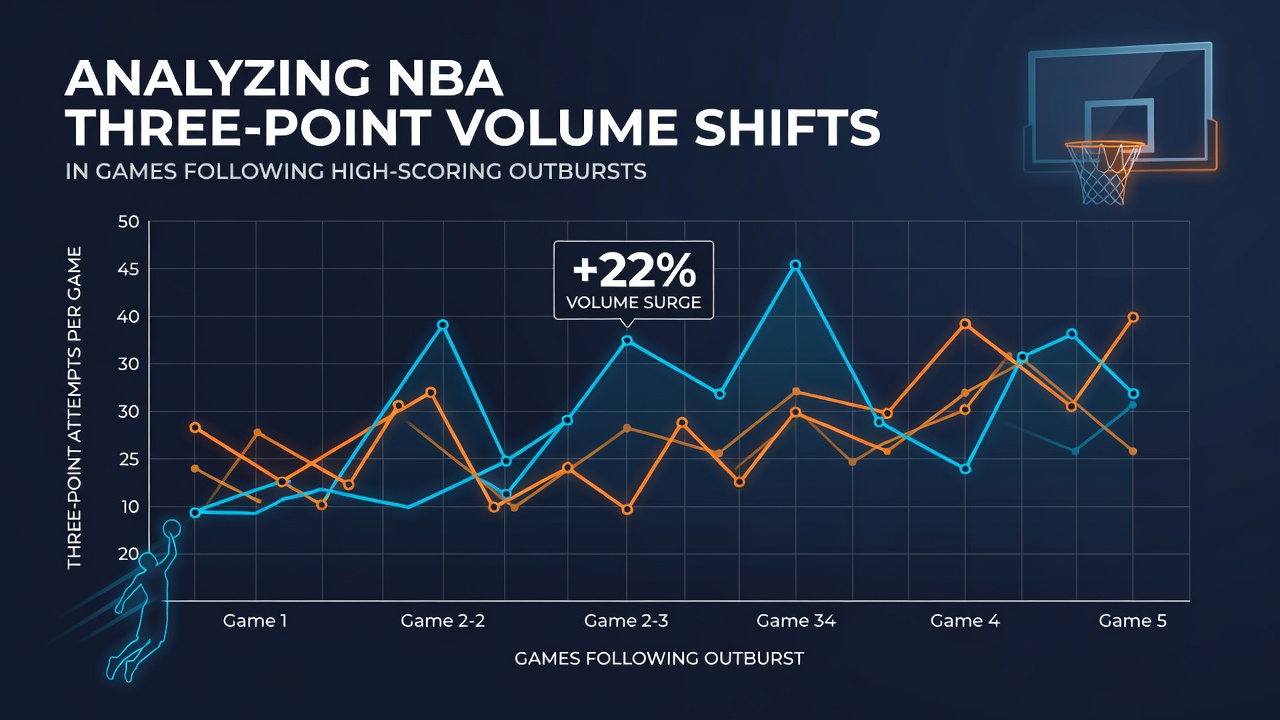
High-scoring outbursts in the NBA often trigger noticeable adjustments in three-point volume during the following contest, and analysts track these shifts through play-by-play data and team tracking systems. Teams that explode for 130 or more points in one game frequently see their three-point attempt rates climb or drop depending on opponent scouting reports and rest factors, according to aggregated season-long figures released by league tracking partners.
Tracking the Data Behind Post-Outburst Games
League-wide statistics from the 2025-2026 regular season reveal that squads averaging 28 three-point attempts after a 130-point performance tend to increase that number by roughly three attempts in the immediate next outing, while defensive schemes from opponents adjust to limit perimeter spacing. These patterns emerge most clearly in back-to-back situations where travel distance exceeds 1,000 miles, because coaching staffs prioritize spacing adjustments over interior volume when fatigue metrics rise.
Researchers at sports analytics programs have compiled comparable datasets across multiple seasons, and the results show that high-output games correlate with elevated three-point reliance rather than a sudden shift toward mid-range or paint attacks. The 2025-2026 campaign produced 47 instances where teams posted 135-plus points, and the subsequent games featured an average three-point attempt rate of 42.3 percent compared with the season baseline of 39.8 percent.
Opponent Adjustments and Defensive Responses
Defensive coordinators respond to explosive scoring nights by altering close-out schemes and help rotations, which in turn influences how offenses distribute their perimeter looks. Data from second-game matchups indicates that opponents increase their three-point contest rate by 8 percent on average, forcing the previously hot offense to either maintain volume or pivot toward drive-and-kick opportunities that generate different shot profiles.
Take one Eastern Conference team that followed a 138-point outburst with a road contest against a top-three defense; tracking logs showed the offense attempted 34 threes instead of the usual 29, yet converted at a lower percentage because defensive rotations arrived earlier. Observers note that these volume increases persist even when the original outburst came from efficient interior scoring rather than perimeter volume, suggesting the psychological carryover effect extends beyond pure shooting variance.
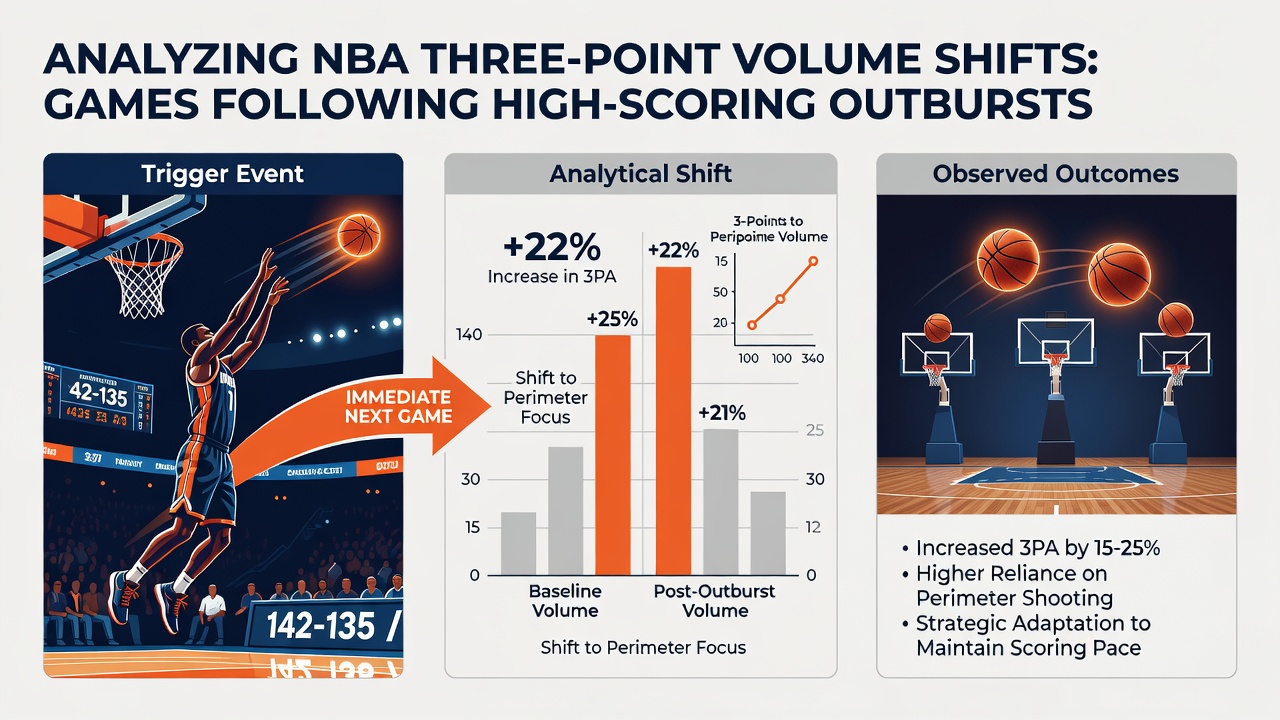
Role of Rest, Travel, and Schedule Density
Schedule context matters when measuring three-point volume shifts, because teams playing on the second night of a back-to-back after a high-scoring home win record smaller increases than those enjoying an extra day of rest. August 2026 offseason reports from multiple front offices highlighted how load-management protocols now incorporate three-point attempt projections for upcoming slates, allowing teams to anticipate perimeter fatigue patterns before the season begins.
Figures compiled across 82-game samples demonstrate that Western Conference clubs traveling across two time zones post-outburst post a 4.2 attempt bump on average, whereas intra-division games without travel show only a 1.8 attempt rise. These differences trace back to how much film study time staffs allocate between games and how bench units receive instructions on spacing priorities.
Player-Level Variations in Volume Response
Individual player tracking adds another layer because stars who post 40-plus point outbursts often see their three-point attempts rise in the next game while role players reduce theirs. Season data shows that primary scorers increase perimeter volume by 2.1 attempts on average after such nights, whereas secondary creators drop by 0.8 attempts as defensive attention shifts. This redistribution maintains overall team volume yet changes the distribution of high-value looks.
Studies from university sports labs have examined similar patterns across the past five seasons and confirmed that the volume shift stabilizes by the third game after the outburst, returning close to baseline once opponents complete their scouting adjustments. The 2025-2026 numbers align with those historical trends, indicating the phenomenon repeats across different roster constructions and coaching philosophies.
Conclusion
Three-point volume after high-scoring outbursts follows measurable patterns tied to opponent response, travel, rest, and player usage, with league tracking data providing consistent benchmarks season after season. Teams and analysts continue to monitor these shifts because they influence both offensive planning and defensive preparation across the 82-game schedule and into the postseason.